search tools


    Angels and Infidels: Studio Practices

    A place to ponder Art and its possibilities

    Please visit our sponsors

      Tuesday, August 12, 2008

      Walk the Walk in a Bavarian Tagenbuch


      Amie Oliver - Über die Ästhetik der Avantgarde hinaus...

      Es gibt ein wundervolles Wagnis bei den Arbeiten von Amie Oliver. Im Angesicht von van Goghs Errungenschaften braucht es eine Menge Mut oder ziemlich viel Naivität, wenn man der heutigen Öffentlichkeit Bilder von Sonnenblumen, vor allem in Verbindung mit Porträts, zeigt. Diese für sich „im Stillen" zu malen ist eine Sache, sie aber öffentlich zu machen schon eine andere. Dennoch ist es genau das, was Oliver gemacht hat und womit sie ihr Publikum herausfordert, ihre Arbeit ernst zu nehmen. Doch wie hat sie das bewerkstelligt? Die Arbeiten sind in einer realistischen(d.h. einer nicht-avantgardistischen) Weise übersetzt worden, die der modernen Ästhetik wenig Beachtung schenkt; weder beziehen sie die Moderne vollständig ein, noch stellen sie sich ihr stur entgegen.

      Welche Referenzen ermöglichen dem heutigen Publikum infolgedessen Zugang zu solchen Arbeiten, einem Publikum, dessen ästhetisches Verständnis größtenteils von avantgardistischen Ideen der Moderne geprägt wurde?

      Es ist gar keine Frage, dass die Avantgarde die Kultur der Moderne mindestens seit Mitte des 19. Jahrhunderts charakterisiert hat. In Frankreich, angefangen mit Courbets Gemälde „Das Atelier des Künstlers" von 1855 und dann besonders in der Zeit von Manets kontroversen Gemälden von 1863, „Das Frühstück im Freien" und „Olympia", wurde klar, dass sich ein bewusster Bruch mit der Tradition im Bereich der Kultur ereignete.

      Dieser Bruch hallte auch in den Entwicklungen anderer Bereiche wie Industrie und Technologie wider. Als der Fortschritt in diesen Bereichen anwuchs, gewann „das Neue" immer größere Bedeutung, und modern zu sein hieß nicht nur, die bestehende Ordnung anzugreifen indem man alte Herangehensweisen ablehnte, sondern es bedeutete auch eine nahezu bedingungslose Übernahme des „Neuen", als Realität sowie als Idee.

      Vielleicht symbolisierte die Idee des „Neuen" den Fortschritt der Moderne und „das Neue" als Weg zu einem besseren Leben wurde zur „promesse de bonheur", die die Moderne antrieb.

      Für Künstler des 19. Jahrhunderts wurde das Alte von der Akademie und ihrer Traditionen verkörpert. Jegliche Annäherung an die moderne Gesinnung bedeutete eine Ablehnung dieser Traditionen. Es bedeutete eine Aufgabe der klassischen Grundlagen, welche das Fundament des figurativen Realismus formten und eine Zuwendung zur Entdeckung neuer Formen und den Gebrauch neuer Materialien. In seiner extremsten Form, der Avantgarde, führte die moderne Gesinnung der Rebellion zu Entscheidungen hinsichtlich Form und Material, die vielmehr aufgrund ihres Schockvermögens als ihres künstlerischen und ästhetischen Wertes getroffen wurden; das ist schon bei den oben genannten Werken von Courbet und Manet sichtbar. Die Suche nach dem „Neuen" und die Erkundung dieses unbekannten Gebiets wurde zum inoffiziellen Ziel des Künstlers in der modernen Gesellschaft, vor allem das des Avantgarde-Künstlers. Trotz theoretischer Diskussionen über die Postmoderne und angeblich neuer kritischer Denkweisen verharrte dieses Ziel größtenteils an seinem Platz.

      Die Neuerfindung der Form und der Gebrauch neuer Materialien und Medien zeigen immer noch auf, was als Vorreiterrolle in der Kunst angesehen wird; kurz gesagt, „das Neue" stellt immer noch den Rahmen, mit dem zeitgenössische Kunst beurteilt wird.

      Das erklärt auch das aktuelle Phänomen, bei dem jungen Kunststudenten eine große Karriere machen können, noch bevor sie überhaupt ihr Studium abgeschlossen haben. Der Gedanke des langsamen Reifens und die Entwicklung der künstlerischen Arbeiten, etwas das durch eine ausgeprägte Sicht auf die Welt im Laufe des Alters errungen wird, spielt in diesem Szenario keine Rolle mehr – wie Thorstein Veblen in den ersten Jahren des letzten Jahrhunderts sagte: „Im Kampf zwischen Jung und Alt wird die Jugend Recht behalten!"

      Aber wie kann eine Idee noch fortschrittlich sein, die schon seit über einem Jahrhundert besteht?

      Hinsichtlich der vielen Veränderungen, die wir alleine in unserem eigenen Leben bisher miterlebt haben, können da die modernen Ideen des frühen 19. Jahrhunderts immer noch einen sinnvollen Kontext für die Kunst unserer Zeit stellen?

      Um es hinsichtlich ihrer Arbeiten zu beurteilen, befasst sich Oliver mit diesem Problem in unüblicher Weise. Weder umfasst sie „das Neue" oder schließt es von vornherein aus; sie ignoriert es einfach, indem sie es nicht als ausschlaggebend für die heutige Kunst empfindet.

      Somit macht sie die ganze Frage nach „dem Neuen" nicht nur irrelevant, sie untergräbt auch die Idee von einem avantgardistischen Bezugssystem. Mit dem Ergebnis, dass ihre Arbeiten und die der ihr gleichgesinnten Künstler unbeabsichtigt eine radikale Stellung anderer Art annehmen. Da ihre Kunst weder schlicht als reaktionär oder rückschrittlich abgetan werden, noch vollkommen als wegbereitend angesehen werden kann, setzt sie sich einer einfachen Kategorisierung und einer darauf folgenden Beurteilung entgegen (ob im positiven oder negativen Sinne). In diesem Sinne trügerisch und gerissen zu sein, mag der Punkt bei Olivers Kunst sein, sicherlich beinhaltet es ein Maß an kritischer Haltung gegenüber „dem Neuen" und ein Bewusstsein der heutigen sozialen Verfassung, in der die avantgardistische Unternehmung Amok lief. Heutzutage wird das Konzept der Avantgarde in der Kunst vom Kommerz übernommen, der nicht endende Strom an Werbungen mit neuen Produkten, so genannten „must-haves", zeigt das deutlich auf. Wir leben in einer Zeit, in der die ursprüngliche Idee des „Neuen" so gründlich von der spätkapitalistischen Kultur im Namen des Kommerz ausgebeutet wurde, so dass sich eine Annahme dieser Idee vielmehr wegen der aktuellen Modeerscheinung und ihrer Neuheit vollzog als eine geniale Rebellion in der Hoffnung auf soziale Veränderung zu sein.

      Bei diesen Umständen kann „das Neue" nicht mehr als Revolution gegenüber einengenden und veralteten Traditionen verstanden werden.

      Die Ansicht, dass die ästhetische Bedeutung nur auf einer Radikalisierung der Form, des Materials und des Mediums basieren sollte, ist nicht mehr so überzeugend wie sie einmal war. Letztendlich ist nicht nur die zeitgenössische Kunst zu einem Teil der Mainstream-Kultur geworden, auch die kulturelle Entweihung der modernen Gattung wird vielleicht bedeutungslos, wenn „das Neue" selbst zum Status Quo wird.

      Sich gegen diese Situation zu stellen, heißt nicht, dass Amie Oliver oder irgendein anderer zeitgenössischer Künstler von der Frage nach der „stilistischen Kompetenz" freigesprochen wird. Es heißt eher, dass „stilistische Kompetenz" jetzt anders verstanden werden muss. Im Fall von Olivers Arbeiten dienen formelle Elemente, Linie und Farbe eingeschlossen, der Thematik und können nicht von Bedeutung und Inhalt getrennt werden. In ihren neusten Arbeiten beispielsweise vermeidet Oliver sorgfältig klare, starke Farben, die ihnen eine dekorative Lebendigkeit geben würden. Stattdessen wählt sie Farben mit sich beißenden Farbtönen. Hauchdünn aufgetragen scheinen diese Farben wie in der Luft zu schweben, als wären es gestaltlose Schleier, die im Raum treiben. Normalerweise erscheinen solche Farben am Rande zur Auflösung ins Formlose, zum reinen atmosphärischen Effekt zu werden; hier jedoch werden sie durch die Linie aus sicherer Hand in einem unruhigen Gleichgewicht gehalten. Diese Zeichnungen verankern ihre Farben auf der Oberfläche der Leinwand. Darüber hinaus haben sie eine eindringliche Körperlichkeit, die sichtbar wird, selbst wenn sie den Formen nur unmerklich Leben einhaucht, das einer menschlichen Figur oder einer Sonnenblume.

      Auch wenn Olivers Arbeiten nicht unbedingt eine existenzielle Handschrift aufweisen, wie es zum Beispiel beim abstrakten Expressionismus der 50er Jahre der Fall ist, sind sie dennoch eine Ablehnung von anonymen, undifferenzierten Oberflächen, die typisch für fotografische oder digitale Bilder sind. Indem sie die Präsenz der Hand verdeutlicht ist ihre Handschrift genau so wichtig wie das Thema, mit dem sie sich beschäftigt. Eines der Dinge, dass ihre „Handarbeit" offen legt, ist die tiefe Verbindung zwischen der Künstlerin und dem Sujet während des Entstehungsprozesses. Das Behandelte ist nicht irgendetwas da draußen, abgelöst und getrennt vom Künstler, nur darauf wartend, von diesem in einem Augenblick eingefangen zu werden wie ein in der freien Natur lebendes Tier. Es besteht ein Moment intensiver und vorsichtiger Beobachtung, ausgehend davon erscheint nach und nach das Sujet vor den Augen der Künstlerin.

      Die Thematik spielt wiederum eine andere Rolle in Olivers Arbeiten. Es bewahrt ihre Arbeiten davor, etwas zusammenhangslos aus der Vergangenheit zu holen, in der Gegenwart ohne jede Verbindung zur lebendigen Kunsttradition zu isolieren. Dass sie auf solche Verbindungen zur Vergangenheit besteht – und diese nicht einfach im Namen der Moderne abzulehnen – reduziert ihr Werk in keiner Weise. Eigentlich ist es genau anders herum. Es gibt ihren Arbeiten eine zusätzliche Bedeutung und Resonanzmöglichkeit durch die Assoziationen, die sie hervorruft. Gleichzeitig beeinflusst das Verständnis des Betrachters für die bisherige Kunstgeschichte, zum Beispiel seinen Blick auf van Gogh. Im Gegensatz zu seinen Sonnenblumen sind ihre ausgetrocknet, nicht mehr in der Lage, dem Verlauf der Sonne zu folgen, sie biegen und krümmen sich wie Soldaten, die nicht mehr stramm stehen können.

      Ihnen haftet etwas Nachdenkliches an, das sich vor allem in Olivers Porträts äußert.

      Ihre Arbeiten von Verfall und Vergänglichkeit durchdrungen, etwas das sich ganz klar von den jugendlich lebendigen Sonnenblumen van Goghs unterscheidet.

      Olivers Werk, wie jede andere geniale Kunst, beeinflusst unsere Sicht auf und unser Verständnis von früheren Werken. Zur gleichen Zeit erschafft sie einen Raum, in dem sie ihren Arbeiten ihre eigene Präsenz und Lebendigkeit gibt.

      Wie es sich Amie Olivers Kunst zeigt, Kunstwerke erhalten durch eine bewusste Bezugnahme ganz neue Perspektiven und Ansatzmöglichkeiten. All das braucht es, wenn ein Künstler bereit und natürlich auch fähig ist, Werke der bisherigen Kunstgeschichte herauszufordern.

      -Howard Risatti

      translated by Martin Wiesinger

      Labels: bavaria, exhibitions, great conversations, walk the walk

      posted by "" at 2:02 PM 0 comments

      Wednesday, April 30, 2008

      Florida Excursion

      Labels: exhibitions, great conversations, ham

      posted by "" at 10:12 AM 1 comments

      Monday, March 31, 2008

      James River Film Festival highlight!


      The Richmond Indigenous Gourd Orchestra is
      performing a live soundtrack to the silent film,
      “Nanook of the North”, on Saturday, April 5, 2008.
      8:30 PM
      Firehouse Theatre
      1609 West Broad St.

      Tickets are $10
      Seating is limited to about 120.
      Advance
      tickets are advised.
      and available at Plan 9 and
      James River Film Festival Events.
      Click on the link in the title post for a
      complete schedule of festival events.

      This is the second time the Gourd Orchestra has performed to this
      incredible film. The context will be very different... the acoustics
      at the Firehouse Theatre are much different than those at the
      Plant Zero Event Space where the Orchestra premiered this
      composition last year.

      The 2008 performance will engage the audience with
      the creation of a few sound effects and build upon
      the success of their previous orchestration for
      NANOOK OF THE NORTH!


      Labels: great conversations, orchestrations

      posted by "" at 1:17 PM 2 comments

      Friday, February 08, 2008

      Lost and Found AGAIN

      NEW COLLABORATIVE WORK ON VIEW in
      LOST AND FOUND
      mixed media works by

      Kate Duffy
      Aimee Joyaux
      Amie Oliver
      Kathryn Purvis
      Susann Whittier

      After the show opened last month we decided to create a collaborative round robin... each of us began a new work and it was passed from studio to studio until all five of us participated in the process. I am looking forward to seeing the end result this evening and will post the results shortly.

      To see the exhibition Lost and Found please visit:

      Sol Cooper Gallery
      306 N. Sycamore St.
      Petersburg, VA 23803
      804.240.6859

      or click on this link to see photos of the opening reception!

      Labels: ateliers, great conversations

      posted by "" at 1:50 PM 1 comments

      Monday, November 12, 2007

      An invitation to taste wine from the Rhone Valley and more...


      November is filling up and we haven't even thought about Turkey Day. For Harry's distinctive overview of our last collaboration please visit his blog. I love living and working with a true wordsmith.

      Labels: great conversations, Harryman

      posted by "" at 9:28 AM 0 comments

      Wednesday, November 07, 2007

      memory of a megaphone

      Above: a photo from my installation "Walk the Walk" in the Project Space at Plant Zero prior to our performance. Below: video clips documenting the performance "Dictation" by Harry and I, and featuring cameos by art cheerleaders Kendra Wadsworth and Rebecca Goldberg Oliver. Videography for "Dictation" courtesy of acclaimed indie filmmaker David Williams. The installation now includes a DVD player which shows the video work in the context of the installation and components.

      Labels: collaborations, great conversations

      posted by "" at 1:07 PM 1 comments

      Monday, November 05, 2007

      Tim Bowring's Zero Hour with Amie and Harry


      This is an experiment - I've never embedded an audio file of this length and had to convert it from an aiff file.... Enjoy! I am not crazy about the widget and link but at least the interview is available and archived! Thanks, Tim!

      Tim asked us questions about our various projects and our collaboration on DICTATION. Two of the art cheerleaders were on hand to support our endeavor. To see David Williams video of the event click here.


      Labels: great conversations, Harryman

      posted by "" at 4:03 PM 3 comments

      Thursday, November 01, 2007

      Timeless Views from a Southern Artist


      From top to bottom: Sambo Mockbee, Geoge Ohr, Eudora Welty
      and Walter Anderson


      I ran across the post italicized below in Lennie's archive and enjoyed it. I've been following James Bailey's blog for quite a while (Burning the Flesh Off Modern Art) so I was compelled to read his summary of the best DC exhibitions from 2004... Everything in italics is excerpted directly from Lennie's post, linked above. I am not sure where the original TOP FIVE LIST was published.

      Leave it to James W. Bailey to take a simple listing of the top visual art shows from our region and end up with several thousand words on the subject.

      Here's his Top Five List:

      2004 – The Year a Small Army of Mississippi Rebel(lious) Artists Invaded Washington, D.C.

      For the last couple of years I have enjoyed some success (well, some might say so!) as a critically acclaimed experimental photographer who has been exhibited across the country, internationally, as well as right here in the Washington, D.C. area. As a native son of Mississippi, I have been proud and honored to represent my home state with my art.

      I currently live in Northern Virginia and my wide range of artistic activities keeps me in constant contact with many independent visual artists, as well as with a large number of arts professionals who work with some of the most important museums, art centers and art galleries in the country.

      Wherever I travel to exhibit my photography, my Mississippi background seems to quickly become the subject of intense conversation. Art knowledgeable people outside the South are fascinated by Mississippi; yet, the question I get asked most often lately by non-Southern art elites goes something like this: "How did an open-minded liberal white artist like you ever manage to develop in such a backward state that is on the bottom of every list that is so steeped in racist attitudes with such a hate filled history and populated with so many ignorant conservative Republican Christians?"

      Of course, the art sensitive people who ask the above question are usually far too sophisticated to use such crude and direct language (the way we routinely do in the South!) so I’m forced to try and translate their unspoken thoughts... but I’m sure you get the point.

      The negative stereotypes about the people of Mississippi are incredibly pervasive in the cosmopolitan world of high art. Many educated arts professionals that I deal with in the Washington, D.C. area seem to operate under this absurd media induced stereotype that the average white Mississippian is a dangerous gun-toting NRA member NASCAR-fan racist redneck Republican who drives around in a beat-up pick-up truck with Rebel Flag bumper stickers plastered all over his vehicle cruising the back roads of the state looking for liberal democrats to beat up.

      Many people in the rarified heights of the art world don’t know, and don’t really want to know, anything about the real Mississippi. That’s a shame because this place called Mississippi, with a population less than 3 million, has produced more creative people than any other place in the United States of America.

      But despite the condescending comments mouthed by those art snobs who soar in the thin air of high altitude art with the rest of the enlightened and seasoned cultural elite, the meaningful cultural legacy of the grounded dynamic multi-cultural vibrancy of artist heritage of Mississippi will be around long after these people have passed into historic obscurity and, indeed, long after the United States of America even ceases to be united. And no matter what happens in this world, no matter how bad things get, the creative energy of artistic Mississippians will continue to be one of the major forces of passion, hope and love of life that will inspire the world to be a better place.

      Black or white, race doesn't matter, artists from Mississippi have a deep love for the world and have longed shared their talents (talents born from a reality that many of the elites in the world of high art will never understand) in a genuine effort to make the ordinary genuine person who lives in every neighborhood in America, and in every neighborhood of every country in the world for that matter, laugh or think or smile or cry.

      This is what being a passionate liberal Mississippi artist and proud conservative Southern person is all about for me.

      If you don’t get it, you never will... I guess it’s just a Southern thing.

      There were 4 deceased Mississippi artists who have had a profound artistic impact on the world who were exhibited and/or noted in a major way in Washington, D. C. in 2004.

      There was also a 5th living Mississippi artist/photographer who may have had (some are saying he did!) a certain impact in the D.C. area as well; I will let someone else comment on that fella’s contributions, if any, when that glorious day arrives:

      1. Samuel "Sambo" Mockbee - "Samuel Mockbee and the Rural Studio: Community Architecture" at the National Building Museum.

      "A true architect practices all three professions simultaneously. The role of an architect/ artist/ teacher is to challenge the status quo and help others see what the possibilities can be." – Samuel "Sambo" Mockbee

      Only in the South could a white man get away with insisting that he be referred to as Sambo!

      Sambo worked in architectural practice for many years prior to founding the Rural Studio. In 1977, immediately after completing his internship, he founded Mockbee Goodman Architects with friend and classmate Thomas Goodman. The firm quickly built a regional reputation for utilizing local materials in its exceptional designs, winning more than 25 state and regional awards in four years.

      Architect Samuel Mockbee was convinced that "everyone, rich or poor, deserves a shelter for the soul" and that architects should lead in procuring social and environmental change. But he believed they had lost their moral compass. The profession needed reform, he believed, and education was the place to start. "If architecture is going to nudge, cajole, and inspire a community to challenge the status quo into making responsible changes, it will take the subversive leadership of academics and practitioners who keep reminding students of the profession’s responsibilities," he said. He wanted to get students away from the academic classroom into what he called the classroom of the community.

      Architecture students enrolled in the Rural Studio actually live in and become a part of the community in which they are working. This "context based learning" format teaches them critical architecture skills with an eye towards social responsibility. It is said that to his students, Mockbee presented architecture as a principle that must be committed to environmental, social, political and aesthetic issues.

      Samuel Mockbee was awarded the MacArthur Foundation Genius Grant in 2000 shortly before he died at the age of 57. He was post-humously awarded the 2004 AIA Gold Medal by the Board of Directors of the American Institute of Architects.

      I considered Sambo to be a friend, an inspiration, a humanitarian and a consummate artist.

      2. Walter Inglis Anderson – "Walter Inglis Anderson: Everything I See is New and Strange" at the Smithsonian Institution's Arts and Industries Building.

      "I am continually arriving from some strange place and everything I see is new and strange." – Walter Inglis Anderson

      Southern museum goers and art collectors have known of Walter Anderson for more than 50 years. They were introduced to him in 1948, when Memphians John and Louise Lehman persuaded Louise Bennett Clark, director of what was then the Brooks Memorial Art Gallery, to mount the first show ever of Anderson’s work. Art critic Guy Northrop, writing in The Commercial Appeal, instantly declared him a "genius." Memphians saw that genius at work again in 1950, when the Brooks focused on Anderson’s block prints, watercolors, and ink drawings, and again in 1967, when the museum put together a major retrospective.

      Southern artists knew of Anderson too. Burton Callicott, painter and instructor at what would become the Memphis College of Art, traveled to Ocean Springs in 1948 for a crash course in pottery under Peter Anderson, the artist’s brother and head of the family’s business, Shearwater Pottery. (Walter’s "gift" to Callicott? A mound of clay, no note attached, one morning at Callicott’s door.) MCA students still camp every summer on Horn Island, Anderson’s Gulf Coast retreat 10 miles offshore from Ocean Springs, and the work they do there is still exhibited at the start of every school year.

      Did Anderson have an "uneasy" life? Yes, to judge from Anderson’s difficulties as a breadwinner and also from the history of his sometimes fragile mental health — periodic verbal and physical violence, sudden disappearances, incidents of self-mutilation, cryptic utterances, and near-catatonic states, until Anderson, in a series of hospitalizations, underwent treatment at Johns Hopkins in Baltimore and the Mississippi State Hospital at Whitfield.

      But it was Horn Island that, in a sense, saved him.

      3. George Edgar Ohr – "The Mad Potter of Biloxi" by Bruce Watson in the February 2004 edition of the Smithsonian Magazine.

      "I am the potter who was." – George E. "The Mad Potter of Biloxi" Ohr

      Despite his reputation for eccentricity, George Ohr was a hard worker. In the later part of his life, he produced quality art pottery that will be appreciated and remembered for centuries. George cultivated the idea that he was crazy, calling himself "The Mad Potter of Biloxi." He said that he was "unrivaled" or "unequalled" and was, by his own estimation, the "world's greatest potter." His antics, self-promotion, and playful spirit are what people remember, rather than what was more likely the case, a determined artist who sought to create attention to his creative production through his eccentric character.

      Ohr's skills exploded when he became an "artist-potter." His claim there were "no two alike" was true. The pinched, folded and twisted clay forms, thinness of the clay wall, fluidity of form, tendril-like handles, and freshness of Ohr's creations illustrate a technical skill that is still unrivaled. One hundred years later, potters marvel at his skill and cannot rightly say exactly how it was done. Critics of the day praised Ohr's glazes, but as his admiration for pure forms executed in clay increased, he left many pieces unglazed in bisque form. He believed only in this state could the form be clearly perceived.

      Ohr's serious creations did not find popularity with the public. And because the Victorian art pottery of the day was carefully controlled and decorated, Ohr’s energetic and expressionistic treatment of clay was too wild even for refined tastes. Ohr was passionate about his work and supremely confident in his talent. He wrote to an art critic, "I am making pottery for art’s sake, God’s sake, the future generation, and — by present indications — for my own satisfaction, but when I'm gone my work ... will be prized, honored and cherished." In l899 he packed up eight pieces and sent them to the Smithsonian Institution. One of the pots was inscribed, "I am the Potter Who Was."

      4. Eudora Welty – Passionate Observer: Photographs by Eudora Welty at the National Museum of Women in the Arts.

      "I traveled the entire state of Mississippi taking pictures. I saw so many people who had nothing.. . . But even as people struggled, I was aware at a deep level of the richness of life going on all around me. I felt something about this time so strongly that the image stayed with me always." — Eudora Welty

      Welty’s career as a photographer comprised a brief part of a long life, but it complemented her later work as a writer. In the late 1930s, Life magazine published Welty’s photographs. She also had exhibitions of her more artistic photographs in New York in 1936 and 1937. In the early 1940s, Welty’s career as a photographer for the most part ended after she decided to instead concentrate on writing.

      The photographs that Welty took while traveling through Mississippi for the WPA didn’t get published until nearly four decades later in the book "One Time, One Place: Mississippi in the Depression." However, Welty’s photographs were never widely exhibited during her lifetime, besides a few limited-edition portfolios. In fact, most people did not even know of her years as a photographer until after her death in 2001.

      5.) GUESS WHO?
      What does it mean to be an artist from Mississippi? Simply this: It means being true unto yourself and your vision and trying to do the right thing.

      Where am I going?

      What am I doing?

      I don't know I don't know

      Just try to do your very best

      Stand up be counted with all the rest

      Cos everybody knows about Mississippi Goddam

      – Mississippi Goddamn by Nina Simone


      My strategy for dealing with these questions is different than most southern men. I just try to do good work and if people take time to read my bio and ask questions they will learn that I grew up in Mississippi and come from a long line of farmers, choctaw indians and french indian scoundrels. I complained endlessly about the backwardsness of my homestate when I was in college - usually to my Dad. The most true thing he ever told me:

      "Daughter, Mississippi is last in everything...Its last in this, and this and this (he gave specific lasts the state was known for at the time)... and then he proceeded... and when the rest of the world goes to HELL we'll be the last to go."

      What is very ironic is that this past Sunday I was walking across the James River (not on the rocks, though we likely could have with the current drought conditions) but over the Mayo bridge... with a colleague from DC and another from here that we came across on the bridge. I introduced my two friends and we compared notes on our Sundays... my friend from here said that she had a strange meeting her parents that morning... they met and determined what meeting points they would utilize in case of natural or terrorist disaster... and what local and national strategies they would exercise based on the "situation" at hand.

      I proceeded to convey my father's truism about Mississippi and I invited my friend from DC to make her way here to join me on my journey south... (She lives seven blocks from the Capitol...) first to gather relatives in NC and then to proceed to last place on earth to go if everywhere else has gone to h... .. it sounds like Mr. Bailey will be right behind us.

      Labels: great conversations, mississippi

      posted by "" at 11:30 AM 0 comments

      Wednesday, October 31, 2007

      David Williams' short video of DICTATION


      Ay yi yi. October is finally over - in seven minutes. Maybe NOW, during November there will be time to breath freely and take in the season? (please?) The Harryman and I have a number of events on our calendar but nothing could compare to the frenetic pace of October. If "True Richmond Stories" were published in 2008 instead of 2007 how would it describe the past month? An ode to my bronchial crud? A few notes dedicated to the Folk Festival?... but that is all for naught. November is here. The David Williams video above documents our performance of DICTATION @ Plant Zero this past Friday.

      Most everyone you see in the video braved awful pouring rain and wretched traffic to be there - I suppose there could be a few people who were already at Plant Zero when it started raining cats and dogs... but most of the rest of us would have been home otherwise! Of course... THE SHOW MUST GO ON (!) and it did. David Williams was especially wonderful to get out in the weather and shoot and edit the DICTATION video for us. David is most known for his films "Thirteen" and "Lillian." I was fortunate to work with him for several years during the making of "Long Art." Guest artists include two of the Richmond Art cheerleaders: Kendra Wadsworth and Rebecca Goldberg Oliver.


      The DVD monitor at Plant Zero will also feature the Praxis Trailer (the other video depicted here) which I put together earlier this year. I hope I'll be able to go in and re edit the credits since they are practically unreadable in the smaller format. I can understand why so many artists and painters go into film and videography... if your media/technology works it is kinda fun.

      Labels: great conversations, weather, writing

      posted by "" at 11:46 PM 5 comments

      Thursday, October 25, 2007

      DICTATION: Oct 26 @ Plant Zero 7:30pm


      What: a short performance piece with guest Harry Kollatz, Jr that is part of WALK THE WALK: new work by Amie Oliver which closes on December 23

      When: 7:30pm October 26, part of the FOURTH FRIDAY artwalk which runs from 7 - 10pm

      Where: Project Space of Plant Zero Art Center, 0 E. 4th St in the Manchester District of Richmond, VA

      for more info:
      listen to WRIR's (97.3 FM) ZERO HOUR at NOON on Friday, October 26, Tim Bowring's weekly interview program. Tim has weekly conversations with local artists about art, culture and society in Richmond. Friday, Oct 26 will feature Amie and Harry talking about DICTATION, Walk the Walk and Harry's new book TRUE RICHMOND
      STORIES.

      TRUE RICHMOND STORIES will be for sale after the performance for anyone interested in purchasing a signed copy


      True Richmond Stories

      WRIR 97.3 FM


      Labels: great conversations, ham

      posted by "" at 10:50 AM 3 comments

      Monday, October 08, 2007

      Harry and Liz on Wordy Birds

      width="145" height="60" type="application/x-shockwave-flash">

      Labels: great conversations, Harryman, media literacy

      posted by "" at 1:07 PM 0 comments

      Monday, August 27, 2007

      Three Amigos


      This post is in honor of three artists or writers who have inspired me on many levels. On the left: Olivier, a lovely and generous French writer who runs a bookstore in the 14th ar. Middle: I met Goxwa in Paris in 1994. She is a force of nature. She amazes me with her talent and success as a painter and even greater, a muse. Right: The painting on the right should be a portrait of Bob. He's not one for sitting still, even at the ripe age of 84 he is a brilliant, charming survivor of the wrath, beauty and excesses of the 20th Century. As an American living in Paris during the mid century he met Hemingway, interviewed Gertrude Stein and developed a notorious reputation as turning in the most outlandish receipts for his Time-Life Expense Account.. . and I look at him and I see Harry in 40 years. When asked who he preferred, Hemingway or Fitzgerald - his brilliant answer was Faulkner. Ah, a man after my heart.

      This series was created during my time in Auvillar, referenced here.

      Labels: art and inspiration, French, great conversations

      posted by "" at 9:52 AM 2 comments

      Thursday, April 19, 2007

      Rauschenberg's follies


      Everyone here is headed to DC to see the retrospective of Jasper Johns' paintings before it closes at the end of April. There was a time when I found great inspiration in John's work and sense of humor. His work doesn't do it for me these days. The last time I looked it seemed dated.

      Last month I managed to make time while I was in NY to visit a small exhibition of Rauschenberg's early transfer drawings. I found them to be just as delightful in March as I did 20 years ago. Maybe I am a sucker for his mark-making? They remain to be current for me... even work made so long ago... and personal. It is work that combines the personal and the political with a vibrant curiosity about artistic boundaries, technology, etc. I haven't given up on John's work. His show at the National Gallery closes at the end of April. It deserves a visit and I hope to make the time to see it.

      I've linked the title of this post to a great site I've just discovered. As much as I try to always look forward its just my nature to look back. This drawing and the music and graphics from this link were made within a very short time period of each other. Although each artist work comes from a very different place here is a sweetness in both that I find sorely lacking in contemporary art pop culture. Irony is a bitter pill and I've lost my appetite for it.

      Labels: great conversations, NYC, time

      posted by "" at 10:11 AM 2 comments

      Tuesday, March 27, 2007

      Table for Eight

      Today I'm presenting my concept for a commission in the new coffeeshop at our university library. This process is something I have experience doing and one thing I've learned is that decisions made by committee are completely unpredictable!

      My approach celebrates cafe society and the contributions that Virginia Artists and Writers make to our culture. Its a continuing dialogue since life is short and art is long. The words and images of the artists depicted in the mock up to the right transcend their lifetime and offer us greater insight into what it is to be human.

      I would love to complete this commission and if given the chance will create work that will transcend my time, work that will transcend the life of the coffee shop, art that will become a part of the university's history and future dialogue.

      Labels: great conversations, tearoom, Virginia, writing

      posted by "" at 12:06 PM 3 comments

      Sunday, March 25, 2007

      Discoveries from the Archive

      I've written about the comprehensive and always expanding Oliver/Kollatz archive before... but don't think I've expressed the wonders of its mysteries. It has fed my art and research, my husband's writing and now, during the first days of spring, a strong sense of sentimentality. Somehow I've managed to live these many years in places that span the nation and the globe without ever getting rid of the many things that so many people toss away without a thought. Really! It amazes me what people throw away. I DO love purging and tossing things that have lived a full life (like the fridge we inherited five years ago that has finally bitten the dust.)

      In an attempt at a spring purge I unearthed a stash of my favorite photos of all time - images that I hold dear to my heart. I am SO HAPPY to have found them and to be able to share them with my family and friends in this way. Most of the selection above is from a collection of square photos taken when I was twelve and my favorite cousins and their mom visited us. They traveled from Germany to see us so it was a very celebratory time whenever we had the chance to visit. The one in the top left corner was of the three of them taken in front of our family home. The top middle and bottom left and right images were taken at Grenada Lake. The top right photo was taken at a party celebrating my brother's pending marriage and the bottom middle photo is of my best friend from highschool (the one with attitude) during her freshman year at a private college in the south. They looked like preppie girls but believe me, they weren't!

      I'm struck by how much my 17 year old niece looks like my cousin depicted in these photos. If only we could all spend another afternoon together on that lake or another like it. We are long overdue a sweet afternoon in the sun.

      The photo on the far left is of my other cousin Ruth Marie and her new husband flying off into the sunset for their honeymoon. That's a wedding I regret missing. This is the only one in this series where I wasn't present to witness the actual event. The middle photo on the top of Di and I at breakfast in the house I grew up in. The one on the top right is of her and her little brother Eugene. The one above was accidentally cropped. The photo on the bottom left is of my mother with me in her arms. I think she was 22 years old and a senior at the university. The middle bottom photo is of the same two German cousins depicted above on the right - all that great Grenada Lake. The photo on the bottom right is of one of those rare occassions when Oliver's come home to Mississippi. My great uncle and his wife visited the same farm he grew up on, the same expansive farm my Uncle Bobby continues to work... so my father's brother, his son and then my grandfather's brother and his wife are in the bottom right photo. A number of the people depicted in these photos are no longer around for us to share these photos with - another reason I'm happy to have fished them out of the archive.

      Labels: great conversations

      posted by "" at 2:56 PM 3 comments

      Tuesday, February 13, 2007

      celebrating another kind of conversation - (for more than 20 years...)

      Labels: art and inspiration, great conversations, Richmond, saturday night

      posted by "" at 12:01 AM 0 comments

      Monday, February 12, 2007

      celebrating great conversations


      Venus, Earth and Mars

      Saturday I braved the great outdoors not to miss what I believed would be a great dialogue on artistic influence. I wasn't disappointed. A group of artists and poets which I hold in high regard get together on a monthly basis to bat around ideas over a few bottles of wine. As great as it can be by the end we wind up landing on signs of the times such as the media facination with Anna Nicole Smith.

      My husband, the Harryman, it taking a pilates class for health and research reasons, really... and at the beginning of class this woman rushed into the door and exclaimed "You won't BELEIVE what's happened!!!!!!"

      Harryman's attitude plumets since he fears we've finally bombed Iraq or that terrorists have taken over the White House or some such orange alert fear.... and then the pilatesed woman exclaimed: "Anna Nicole Smith is dead!" Of course this is sad news for her family and the hundreds of advertisers and media moguls who rely on her for moolah but we all know that, like Elvis and all great artists or successful celebrities, she's probably worth more dead than alive.

      The world is so topsy turvey it would be appropo that our next salon topic be who ISN'T the father of ANS's daughter and how much money they should inherit. Sigh.

      Labels: great conversations, media literacy

      posted by "" at 9:35 AM 0 comments

      Wednesday, January 31, 2007

      Adios Bilbao


      Another night train. An young American boy/man from Utah on this one. We compared notes. He told me his Basque friends told him about a painting Picasso made about the Spanish War - and how Picasso would only donate the painting to Spain after the fall of Fascism. He said he was sad he hadn't seen it. I told him he knew the painting through books and television... it is a famous painting! I described Guernica and his eyes lit up... oh yeah....

      I am counting the days until I can visit this painting at the Reine Sofia in Madrid.
      I've included a preview below.

      Labels: bilbao, democracy, great conversations, Madrid

      posted by "" at 11:26 PM 0 comments

      Sunday, December 24, 2006

      Holiday on Ice!


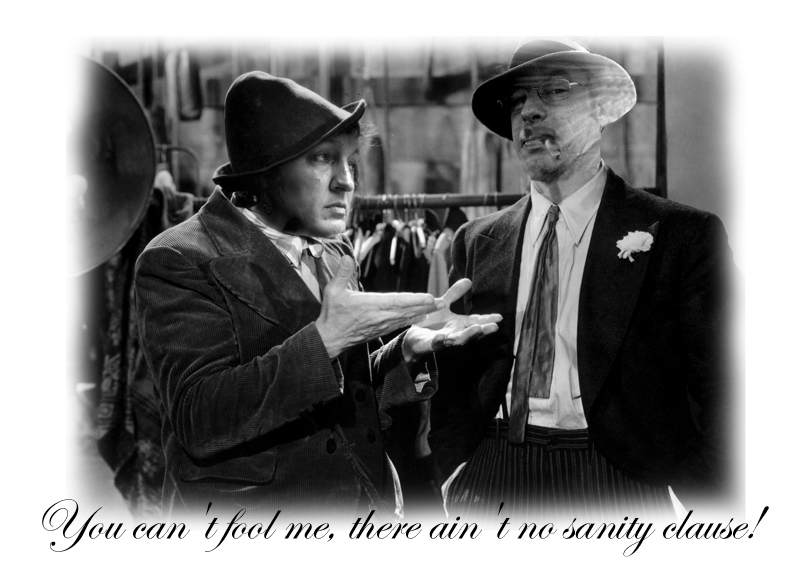
      Harry brought up this scene from the Marx Brother's "A Night at the Opera" during one of our Monday evening walks from the VACR. I don't remember the context of the conversation but I knew it would be the most appropriate source of inspiration for our holiday card this year. 2006 has been a long year full of tragedy and hope. I am more in the mood for Holiday Spirits than Cheer and that's not good! My husband's sense of humor is one of the saving graces of our life together... another blessing I'll add to the list. Ho, Ho, Ho!

      Labels: great conversations, ham, Harryman, time

      posted by "" at 9:20 PM 4 comments

      Thursday, December 07, 2006

      Lesson for the Day

      Tenneessee Williams

      La mémoire est un drôle de brouillard.
      Memory is a strange kind of fog. --Valère Staraselski

      Something best emplified by southern writers like Tennessee Williams and William Faulker. My dad recently reminded me that Faulkner was a postal worker in his early days. He got some of his best material sitting behind the mailboxes and eavsdropping on the chit chat of the locals when there were lulls. So, even foggier than ours, are the memories of others.

      Labels: great conversations, time, writing

      posted by "" at 4:43 PM 0 comments


    present tense

    autoportrait (Bio)

    • Amie and Harry
    • Links to Amieo's Recent Work and the Oliver/Kollatz Archive

      • ZERO HOUR with Tim Bowring: an interview with Harry and Amie prior to DICTATION
      • Walk the Walk - a catalogue featuring an essay by Howard Risatti
      • Walk the Walk Site
      • The Invitation
      • A BRIEF Preview of "Walk the Walk"
      • A Praxis Tale of Two
      • An archive: Exhibitions 2004 - 2006
      • The Painting Center Files
      • Studio and Professional Links
      • A Sketchbook
      • Flash Gallery
      • True Richmond: Stories of Richmond told by Harry Kollatz, Jr.
      • Harry's blog: The Blue Raccoon
      • Liz Humes interviews Harry for WRIR
      • Worth Reading

        • Edward Winkelman
        • The Exquisite Corpse
        • Delicate Monster
        • Arts and Letters Daily
        • Anaba
        • Anonymous Female Artist
        • Apotropaia
        • Black Cat Bone
        • Shelley Lives
        • Wonkette
        • Bob
        • Robert Wernick
        • du blog
        • Venus Rising
        • Pogue's Posts
        • 1708 Blog
        • DC Art News
        • Grizedale Forest
        • Teacosy Revolution
        • Fallon Resources
        • Renegade Eye
        • smArts $ Culture
        • Sylvia White Art Advice
        • Bare and Bitter Sleep
        • arttalk
        • Roberta & Libbie's Phillie Blog
        • dcist
        • Wikipedia
        • The Mutation Project
        • Sally's two small rabbits
        • Artificum of Humanitas
          • www.flickr.com
            This is a Flickr badge showing photos in a set called Angels and Infidels: New Mixed Media Work by Amie Oliver. Make your own badge here.

            Worth a Look

            • Saatchi Gallery
            • Megan Marlatt's Studio Visit
            • Chelsea Galleries
            • Linda Laino
            • The Praxis Project
            • One Hundred Women Paint the Sea
            • LMCC
            • MOMA
            • The Louvre
            • The British Museum
            • London's National Gallery
            • Scotland's National Gallery
            • The Smithsonian
            • National Gallery of Prague
            • Museum of Contemporary Art, Chicago
            • The New Museum
            • Judeglass
            • 1708 Gallery
            • A Painting a Day
            • Amie Oliver
            • Painters NYC
            • GOXWA
            • Designer's Block
            • Sheila B
            • Baltimore Art
            • William Greiner
            • Susanne K. Arnold
            • David Bruce

            • Locations of visitors to this page

              Regional Fare

              • Down in the Parrish
              • NOLA Live Journal
              • ernietheattorney
              • gulfsails
              • Miranda July
              • ARTHROB
              • NYARTS Magazine
              • About Last Night
              • Laduree
              • Ink Tank
              • Previous Posts

                • Notes for Heaven, Earth and Sea @ Quirk Gallery
                • Artists and Writers. Round 2 @ Flippo Gallery, Ran...
                • Paper Journeys
                • art for the ears
                • The Dharma Diaries are on the road!
                • Louise and her laire
                • flash amie
                • The Dharma Diaries: There and Back Again
                • The Dharma Diaries: There and Back Again
                • 2009 Ladder Sketchbook

                Archives

                • June 2002
                • July 2003
                • October 2003
                • May 2004
                • November 2004
                • December 2004
                • March 2005
                • May 2005
                • June 2005
                • July 2005
                • August 2005
                • September 2005
                • October 2005
                • November 2005
                • December 2005
                • January 2006
                • February 2006
                • March 2006
                • April 2006
                • May 2006
                • June 2006
                • July 2006
                • August 2006
                • September 2006
                • October 2006
                • November 2006
                • December 2006
                • January 2007
                • February 2007
                • March 2007
                • April 2007
                • May 2007
                • June 2007
                • July 2007
                • August 2007
                • September 2007
                • October 2007
                • November 2007
                • December 2007
                • January 2008
                • February 2008
                • March 2008
                • April 2008
                • May 2008
                • June 2008
                • July 2008
                • August 2008
                • September 2008
                • October 2008
                • November 2008
                • December 2008
                • February 2009
                • March 2009
                • May 2009
                • June 2009
                • July 2009
                • August 2009
                • September 2009
                • October 2009
                • November 2009
                • March 2010
                • April 2010
                • May 2010
                • June 2010
                • July 2010
                • February 2011
                • November 2012
                LogoInternet ArtResources
                The collector’s guide to the visual arts!

                Powered by Blogger

                Who Links Here


    Creative Commons License
    This work is licensed under a Creative Commons Attribution-Noncommercial-No Derivative Works 3.0 United States License.